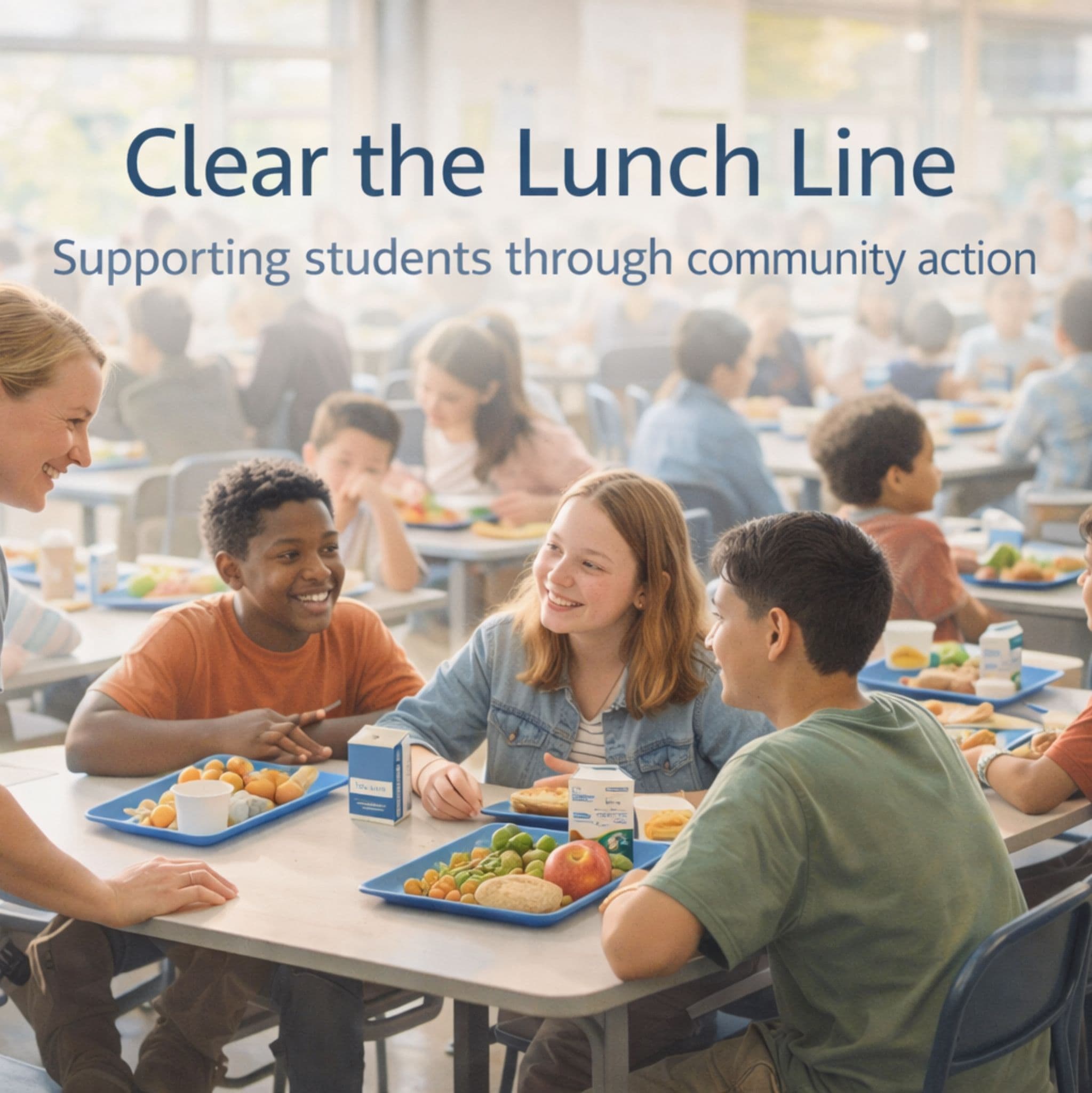
Why School Lunch Debt Matters and How Communities Can Help
Across the United States, millions of students rely on school meals every day. For many families, these meals provide consistent nutrition that helps children stay focused, energized, and ready to learn. But for some families, unexpected financial challenges can lead to unpaid meal balances, commonly referred to as school lunch debt.
School lunch debt occurs when a student receives meals at school but the family account does not have enough funds to cover the cost. Over time, these balances can grow and create stress for families and administrative burdens for schools.
Clear the Lunch Line was created to help communities step in and support students by paying down these balances so that children can focus on learning instead of worrying about unpaid meals.
Access to nutritious meals during the school day has been shown to support both academic performance and student well being. According to research from organizations working in child nutrition, students who have access to reliable meals are more likely to stay engaged in class and perform better academically.
School meal programs also play an important role in supporting families by helping reduce daily food costs and ensuring children receive balanced nutrition during the school week.
Lunch debt can happen for many reasons. Families may experience temporary financial hardship, changes in employment, unexpected medical expenses, or other challenges that make it difficult to keep meal accounts fully funded.
Schools typically work closely with families to resolve balances, but unpaid meal accounts can still accumulate over time. In some districts across the country, schools collectively carry thousands or even millions of dollars in unpaid lunch balances.
Community driven efforts can help relieve this burden and support both families and schools.
One of the most effective ways to address lunch debt is through local community support. When individuals, organizations, and businesses contribute to targeted fundraising campaigns, those funds can go directly toward clearing meal balances for students.
Clear the Lunch Line works with community members and schools to organize campaigns that raise funds to pay off these balances in a transparent and respectful way.
Even small contributions can make a meaningful difference when communities work together.
If you would like to learn more about school meals and child nutrition programs, the following resources provide helpful information.
These organizations provide research, policy information, and resources related to school meals and child nutrition across the United States.
Every student deserves the opportunity to learn in a supportive environment where basic needs are met. By working together, communities can help ensure that unpaid meal balances do not stand in the way of students receiving the meals they need during the school day.
Clear the Lunch Line is committed to helping communities organize around this goal through local campaigns that directly support schools and families.
When communities come together, small acts of support can create lasting impact for students.